What To Write In Kick Count Log Entries
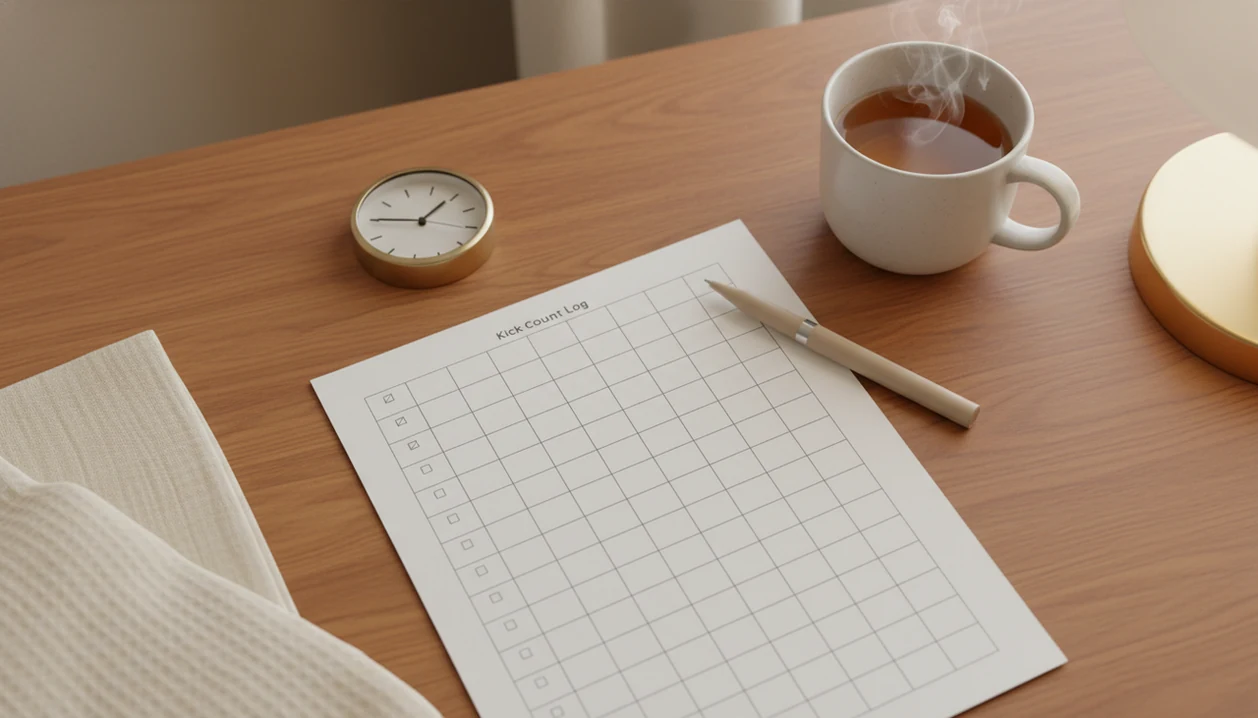
what to write in kick count log entries includes the date, start time, end time or minutes to 10 movements, total movements if you are doing a timed count, movement strength, your position, and short notes about anything different from your baby’s usual pattern. The goal is to make each entry consistent enough that a slower, weaker, or unusual movement session stands out clearly.
> A kick count log is a simple paper or app record of fetal movement sessions that helps you track your baby’s normal third-trimester movement pattern and describe changes to your healthcare provider.
- Record the same core fields every time: date, start time, end time, minutes to 10 movements, strength, position, and notes.
- Use kick count notes to capture context, such as lying on your left side, eating recently, feeling distracted, or noticing weaker movement.
- Call your provider promptly if movement is clearly reduced, much slower than usual, much weaker, or concerning to you.
Kick Count Log Fields For A Complete Entry
A complete kick count log entry records the date, start time, end time or total minutes, total movements, movement strength, body position, and brief notes about anything different.
Those fields matter because a kick count log is not a contest against one universal number. It is a record of your baby’s usual movement pattern, especially in the third trimester. Many instructions use a 10-movement method, where you time how long it takes to feel 10 kicks, flutters, swishes, stretches, or rolls.
A useful entry might say: “May 8, 9:05 p.m., left side, 10 movements in 24 minutes, usual strength, low pelvic wiggles.” That is easier to compare than “10 kicks.” If you prefer paper, a printable kick count chart can keep the same fields visible.
How Kick Count Logging Works
Kick count logging works by turning repeated movement sessions into a personal baseline for your baby. Instead of treating one count as a diagnosis, the log helps you notice whether today’s timing, strength, or pattern feels different from what is usual.
The method depends on comparability: using a similar time of day, body position, and strength label makes entries easier to line up across days. Timing shows how long it takes to feel a set number of movements, position explains what your body was doing, and strength describes how clear or forceful the movements felt. Kicks, flutters, swishes, stretches, and rolls may all be part of the pattern if your provider has told you to count them.
- Choose a routine counting window when your baby is often active.
- Record the same fields each session, including start time, duration, position, and strength.
- Compare the entry with your recent normal pattern, not with someone else’s baby.
- Contact your provider if movement is reduced, absent, much weaker, or concerning.
Logs support clearer communication with your care team, but they do not diagnose fetal wellbeing. Your provider’s instructions always override any general counting method.
Before You Start A Kick Count Log
Before you start a kick count log, get your provider’s instructions and set up a repeatable routine. A few decisions made ahead of time make the log easier to complete and easier to explain if a session feels concerning.
- Ask your provider when they want you to begin counting and which method to follow, since practices may differ by pregnancy, gestational age, and risk factors.
- Clarify which movements should count for you, such as kicks, flutters, swishes, stretches, or rolls, and ask whether hiccups should be written in a separate note instead of included in the count.
- Choose a usual active window you can repeat most days, like after dinner or during a quiet evening rest, so today’s entry has a fair comparison point.
- Prepare the tool before you start: a timer, paper chart, app screen, or notes field with space for start time, duration, position, strength, and comments.
- Write your provider’s call threshold somewhere visible before a worrying session happens, including what to do for reduced, absent, much weaker, or clearly different movement.
That preparation keeps the counting session focused on what you feel, not on searching for instructions while anxious.
Fetal Movement Log Fields And Daily Pattern Tracking
Fetal movement log fields work by repeating the same details often enough to create a baseline across days and weeks. The baseline is the useful part, not one isolated entry.
Time of day, rest, body position, recent activity, and distractions can all change what you feel. A session on the couch after dinner with a phone timer open may feel different from a count done after walking around a store. Same baby, different setting.
How kick count logging works: repeated entries create a personal movement baseline, and changes from that baseline are easier to notice than single numbers without context. Apps can structure entries, store date-stamped history, and flag unusual sessions, but they cannot diagnose fetal distress. A good fetal kick counter and pregnancy movement tracking app for third-trimester monitoring delivers organized pattern notes, not medical reassurance.
How To Use A Kick Count Log Entry
Use one kick count log entry for one focused movement session. Keep the steps boring and repeatable, because repeatable notes are easier to compare later.
- Choose a usual active time, often after a meal or during a quiet evening routine.
- Start the timer and write the exact start time before you begin counting.
- Count movements your provider says to include, such as kicks, flutters, swishes, and rolls.
- Stop at 10 movements or at the threshold your provider gave you.
- Add notes about strength, position, distractions, and anything different from usual.
- Review recent entries for patterns, especially sessions that are slower or weaker than normal.
The most common medically supported way to use a kick count log is a consistent daily session combined with prompt provider contact for reduced or unusual movement.
Step 1: Write The Date, Start Time, And Setting
“What should I write before starting a kick count?” Write the date, exact start time, and the setting where you are counting.
Include simple setting fields such as sitting, lying down, left-side position, after a meal, quiet room, busy day, or recently active. These details explain why one session may feel clearer than another. A pillow wedged under one hip can make movement easier to notice for some people, but your provider’s instructions come first.
Consistent timing helps you compare sessions more fairly. A 9 p.m. count after brushing teeth is easier to compare with yesterday’s 9 p.m. count than with a rushed afternoon entry in a waiting room. For a fuller routine, a daily kick count log can keep the timing habit simple.
Step 2: Log The Count, End Time, And Duration
- Record the number of movements you felt during the session. - Write the end time or the total number of minutes. - Many kick count instructions use the goal of 10 movements within up to 2 hours. ACOG describes kick counting as timing how long it takes to feel 10 fetal movements, and NHS guidance says to contact maternity care immediately if movements are reduced, changed, or absent: https://www.acog.org/womens-health/faqs/special-tests-for-monitoring-fetal-well-being and https://www.nhs.uk/pregnancy/keeping-well/your-babys-movements/. - If your provider gives a different method or threshold, use that instead. - A duration field makes “10 movements” more meaningful because 10 in 18 minutes differs from 10 in 95 minutes.
Clinicians typically recommend calling for individualized guidance if fetal movement is reduced, absent, much slower, or noticeably different. A folded kick count handout in the side pocket of a hospital bag is useful only if the numbers are clear enough to discuss.
For many people, timing to 10 movements is easier than counting all evening because it creates a clear start and stop point.
Step 3: Add Kick Count Notes About Strength And Pattern
Use kick count notes to describe how the session felt, not to write a long story. Short labels are often enough.
- Strength label: Write strong, usual, softer, much weaker, or hard to feel.
- Pattern label: Write steady, slower, more active, quiet start, or different.
- Scale field: Use a 1 to 5 perceived strength scale if your app or sheet supports it.
- Change field: Add “different than usual? yes/no” plus one short reason.
Changes from the usual movement pattern matter more than one lonely number. “10 movements, softer than usual, took twice as long” is more useful than “10.” A structured log can keep these fields organized when paper notes turn into a crumpled notebook page at the bottom of a purse.
Step 4: Separate Session Notes From Day-Level Notes
Separate session notes from day-level notes so you do not mix one counting period with the whole day. This makes the log easier to scan in an app or explain during a provider call.
| Note type | What to write | Example |
|---|---|---|
| Session-level notes | Position, time, distractions, immediate strength | “Left side, quiet room, usual rolls, 10 in 31 minutes” |
| Day-level notes | Illness, poor sleep, stress, appointments, unusual schedule | “Slept badly, long appointment day, less time resting” |
A date-stamped movement history screen is easier to understand when the fields are not blurred together. Session notes answer, “What happened during this count?” Day-level notes answer, “What else was going on today?” If you need to send organized entries, export fetal movement logs can make that conversation less messy.
Common Kick Count Notes Mistakes To Avoid
- Do not record only a number without the start time, end time, or context.
- Do not assume every baby should match one universal hourly count.
- Do not save notes only for concerning days, because normal days create the baseline.
- Do not ignore a major change just because yesterday’s movement session looked normal.
- Do not use a paper log or app as a substitute for calling your provider when concerned.
Normal entries matter. They are the comparison point.
A common problem is writing “fine” for five days, then having no clear way to explain what changed. Better notes stay plain: “usual strength,” “slower than normal,” or “more rolls than jabs.” For high-anxiety days, a partner can help by reading the timer and keeping the phone charged overnight, but the call decision should still follow your provider’s instructions.
Kick Count Log Changes That Mean Calling Your Provider
Call your provider promptly if movements are reduced, much weaker, much slower, absent, or concerning to you. Use the log to describe what changed, not to decide that everything is safe.
Examples worth reporting include “took twice as long as normal,” “kicks much softer than usual,” or “usual active time felt quiet.” Fetal movement often becomes more regular in the third trimester, and decreased movement in late pregnancy is treated seriously because it can be associated with adverse outcomes.
A date-stamped log can help you record kick count sessions and share clear movement notes with your provider. If you are preparing for a call or appointment, it can also help to share kick logs with doctor so dates, times, and notes are not reconstructed from memory in a hospital parking lot before triage.
Limitations
Kick count logs are useful pattern records, but they cannot prove that a baby is well or diagnose fetal distress. Provider guidance always overrides an app screen, paper chart, or personal guess.
- Kick count logs do not replace non-stress tests, ultrasounds, or in-person evaluation.
- An anterior placenta, higher BMI, fetal position, and maternal activity can make movements harder to feel.
- Different providers may recommend different counting methods, start weeks, or call thresholds.
- Over-checking can increase anxiety, so a sustainable daily kick count routine matters.
- A missed day does not make the whole log useless.
- Any concerning decrease should be addressed even if the log looks incomplete.
- A paper chart or app can organize entries, but it cannot interpret your baby’s condition.
If you are unsure, call your care team and write down what changed.
FAQ
What counts as a kick?
Kicks, flutters, swishes, stretches, and rolls may count as fetal movements if your provider says to include them. Hiccups are often tracked separately if your provider advises that.
When should I start kick counts?
Many providers discuss kick counts in the third trimester, often around the time movement patterns are easier to recognize. Follow your own provider’s timing.
How long should kick counts take?
Many instructions use the goal of 10 movements within up to 2 hours. Your baby’s usual pattern and your provider’s instructions matter most.
Should I log every day?
Mostly daily entries are useful because normal days create the baseline for spotting changes. Missing a day does not ruin the log.
What are good kick count notes?
Good kick count notes include position, time of day, movement strength, recent meal, activity level, and anything different from usual. Keep notes short and consistent.
Do soft kicks count?
Soft movements can count if they are felt as fetal movement and match your provider’s guidance. A clear decrease in strength should be noted and discussed with a provider.
When should I call my provider?
Call promptly for reduced, absent, much weaker, much slower, or concerning movement. Also call whenever you feel something is not right.