When To Start Counting Baby Kicks In Pregnancy
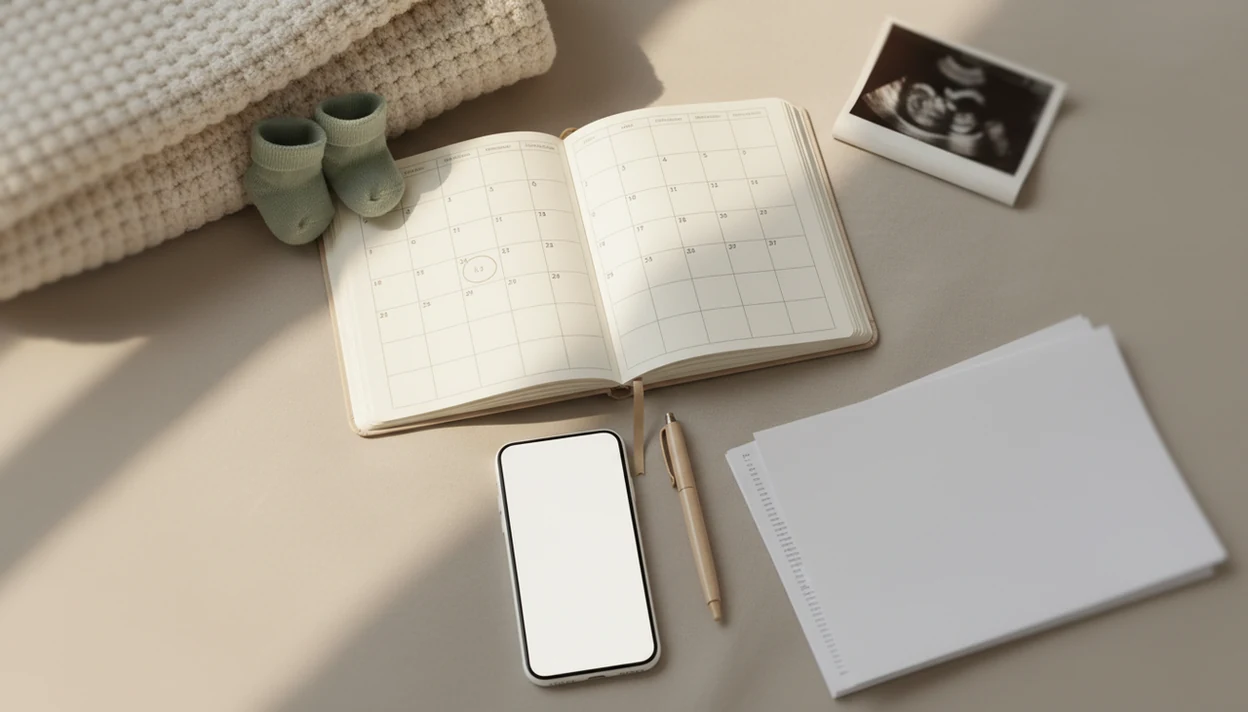
Most pregnant people are told to begin daily kick counts around 28 weeks, at the start of the third trimester, but the right answer to when to start counting baby kicks can vary based on your pregnancy and your provider’s instructions. Earlier flutters are normal, but structured counting usually starts once movements are stronger and more predictable.
This guide is educational and cannot confirm whether a baby is safe. If your baby’s movement is reduced, stopped, suddenly different, or worrying, follow your maternity team’s instructions and call for clinical advice promptly.
> Definition: Baby kick counting is a third-trimester fetal movement tracking routine that records how long it takes to feel a set number of movements, often 10, so you can notice changes in your baby’s usual pattern.
- Many providers and kick-count programs recommend starting daily kick counts at 28 weeks, unless your clinician gives you a different timeline.
- Feeling movement earlier, often between 16 and 24 weeks, is not the same as formal third-trimester kick counting.
- Call your provider promptly if movements slow down, stop, suddenly change, or feel concerning, even if you use an app.
Start Kick Counts At 28 Weeks Unless Your Provider Says Otherwise
Daily kick counting commonly begins around 28 weeks, which is the start of the third trimester. Cleveland Clinic says kick counts are most useful from weeks 28 to 40 source, and Count the Kicks recommends daily movement tracking starting at 28 weeks source.
| Source or guidance type | Common timing | What it means in practice |
|---|---|---|
| Cleveland Clinic | 28 to 40 weeks | Kick counts matter more once movement patterns are clearer. |
| Count the Kicks programs | Around 28 weeks | Begin a daily movement session in the third trimester. |
| Your maternity provider | Individualized | Start earlier or track differently if your pregnancy needs it. |
Clinicians typically recommend following your own provider’s instructions over a generic internet rule. A folded kick count handout in a hospital bag is useful only if it matches the plan your team gave you.
Five Facts About Third Trimester Kick Counts
- Most pregnancy movement guidance points to starting daily kick counts around 28 weeks, unless your provider gives another start date.
- First fetal movements are often felt earlier, commonly between 16 and 24 weeks, according to the NHS source.
- A common benchmark is timing how long it takes to feel 10 movements, often within about 2 hours.
- There is no single normal number of kicks per day; your baby’s usual movement pattern matters most.
- A baby kick counter app can support tracking, but it should never delay a call to your provider.
For many people, the daily routine becomes easier once it has a set place. Same couch. Same note field. Less guessing.
If you need the step-by-step counting method, our guide to how to count baby kicks explains what to record.
Early Flutters Versus Formal Baby Kick Counting
“Do early flutters mean I should start formal kick counts?” Usually, no. Many pregnant people first notice movement between 16 and 24 weeks, or between 16 and 22 weeks depending on the health source, but those early sensations are often irregular.
Early movement may feel like flutters, bubbles, rolls, taps, or a small swish low in the belly. Formal counting usually waits until the third trimester because movements tend to be stronger and more consistent by then.
An anterior placenta, fetal position, body factors, and simple distraction can all affect how easily movement is felt. Someone may notice a roll while lying still, then feel almost nothing during a busy workday. That difference alone does not create a diagnosis, but it is worth writing down if the pattern changes.
For movement examples, read what counts as fetal movement before deciding what to include in a session.
How Third Trimester Kick Counts Work
Kick counting works by building pattern awareness, not by diagnosing fetal well-being. Babies have individual movement rhythms, active periods, sleep cycles, and quieter stretches; repeated daily tracking creates a baseline for comparison.
The most common medically supported way to use kick counts is a daily time-to-movement routine combined with prompt contact if movement changes. Reduced fetal movement can be associated with fetal compromise, so it should be assessed by a clinician rather than managed by repeated home counting.
In one large observational study of more than 68,000 pregnancies, daily fetal movement counting from 28 weeks was associated with a 30% reduction in stillbirth rates compared with historical controls source. That finding is important, but it does not prove counting alone prevents stillbirth.
The log is a signal, not a verdict.
How To Use Baby Kick Counts After 28 Weeks
Use baby kick counts after 28 weeks by choosing a consistent active time, counting defined movements, and recording how long it takes to reach your provider’s target. Many people count on the couch after dinner with a phone timer open.
- Choose a time when your baby is usually active, such as evening or after a regular meal.
- Sit or lie in a position where you can focus without rushing the session.
- Start a timer when you feel the first movement.
- Count kicks, rolls, jabs, swishes, or stretches, unless your provider defines movements differently.
- Save the time-to-10 movements in an app, timer note, or paper log.
- Call your provider if the pattern changes or your provider’s threshold is not met.
For a focused routine, the full process for how to count baby kicks after 28 weeks may help.
Daily Kick Count Timing And Provider Instructions
Many programs recommend one daily kick count session, but practices vary by clinic, country, and pregnancy risk. Some health systems emphasize formal counts, while others teach general awareness of the baby’s usual movement pattern.
Your provider may recommend earlier, more frequent, or different tracking if there are growth concerns, diabetes, hypertension, a history of decreased movement, or another clinician-identified risk. That is not a reason to invent your own rule. It is a reason to ask for the exact threshold.
Write it plainly in your notes: call after what change, after how long, and during which hours. A 9 p.m. phone alert after brushing teeth works better when the call instructions are already saved.
Follow the maternity team’s directions for your pregnancy, including when to go in for assessment rather than waiting at home.
When To Call Your Provider About Baby Movement Changes
Call your provider promptly if your baby’s movement is reduced, stopped, suddenly unusual, or worrying to you. A normal count earlier today, yesterday, or last week does not cancel a concern you have right now.
Use the exact call threshold your maternity team gave you if you have one. That may be a time limit, a number of movements, a change from your baby’s usual pattern, or instructions to go directly for assessment.
- Stop treating the log as proof that everything is fine if the current pattern feels wrong.
- Call your provider, triage line, midwife, or labor and delivery unit using the instructions saved in your notes.
- Say what changed, when you last felt movement, what you counted, and whether the pattern is unusual for your baby.
- Avoid using a home Doppler for reassurance instead of clinical advice; hearing a heartbeat at home does not assess the whole situation.
- Go to urgent maternity care or emergency services if you are severely concerned, movements have stopped, or you cannot reach your provider.
Baby Kick Counter Apps For Third Trimester Tracking
Baby kick counter apps help record date, time, duration, and movement sessions in a consistent format. A digital history can make it easier to notice patterns across days and weeks than a crumpled notebook page at the bottom of a purse.
A fetal movement tracking app can help you keep the timer, session notes, and daily history in one place. Baby Kicks App is one option for logging fetal movement patterns, but the log is only a record to discuss with your provider, not a medical assessment.
A good third-trimester movement tracker should deliver organized logs and reminders, not a diagnosis or permission to ignore reduced movement. Urgent concerns should lead to contacting your provider, not simply repeating a count.
For some readers, a focused Fetal Kick Tracker is easier than a general pregnancy app because it keeps the routine narrow and visible.
Common Mistakes When Starting Baby Kick Counts
The biggest mistake is using kick counts for reassurance when your body is already telling you something changed. If movement is reduced, stopped, or suddenly unusual, do not wait until the next appointment.
Do not start formal counts as soon as you feel any flutter unless your provider specifically asks you to. Early movement can be inconsistent, especially with an anterior placenta or a baby facing inward.
Do not assume babies normally move less near the end of pregnancy. Movements may feel different as space gets tighter, but a real decrease should be discussed promptly.
Do not use a home Doppler or heartbeat sound instead of calling about movement concerns. A heartbeat heard at home does not tell you whether the baby needs assessment.
Also, do not compare your baby’s number with a friend’s. For details on the common benchmark, read 10 kicks in 2 hours.
Baby Kick Count Limitations
Kick counts are useful for movement awareness, but they cannot prove that everything is fine. They also cannot diagnose a problem or guarantee a healthy outcome.
- Normal counts do not replace prenatal visits, ultrasounds, nonstress tests, or provider-directed monitoring.
- Observational evidence should not be overstated as proof that counting alone prevents stillbirth.
- An anterior placenta, fetal position, higher BMI, medication effects, and distractions can affect what you feel.
- Different health systems recommend different protocols, from formal kick counts to general movement awareness.
- Apps depend on consistent use and careful interpretation.
- A saved session from last night does not cancel today’s concern.
- No app or saved log should delay urgent evaluation if movements are reduced, stopped, or suddenly different.
If you are unsure whether a change needs attention, use your provider’s call instructions. If those are not clear, call and ask. For safety language, keep when to call doctor reduced fetal movement available.
Baby Kick Count FAQ
When do kick counts start?
Kick counts often start around 28 weeks, at the beginning of the third trimester. Your provider may give different instructions based on your pregnancy.
Can I start kick counts earlier?
You can write down movements earlier if you want, but formal kick counting should follow your provider’s guidance. Some pregnancies may need earlier tracking.
Is 28 weeks always required?
No. Twenty-eight weeks is common guidance, not a universal rule for every pregnancy or every health system.
How many kicks are normal?
There is no single normal number of kicks per day. Your baby’s usual pattern is more important than comparing totals with someone else.
How long should kick counts take?
A common method is timing how long it takes to feel 10 movements. Many clinics use about 2 hours as a benchmark, but follow your provider’s threshold.
Do babies move less near delivery?
Babies should not simply move less near delivery. Movement may feel different, but reduced movement should be reported promptly.
Can I use a Doppler instead?
No. A home Doppler is not a substitute for movement awareness or clinical evaluation.
When should I call my provider?
Call promptly if movements are reduced, stopped, suddenly changed, or concerning. Do not wait for the next appointment if the pattern feels wrong.