
Fetal Movement Strength Scale for Kick Count Notes
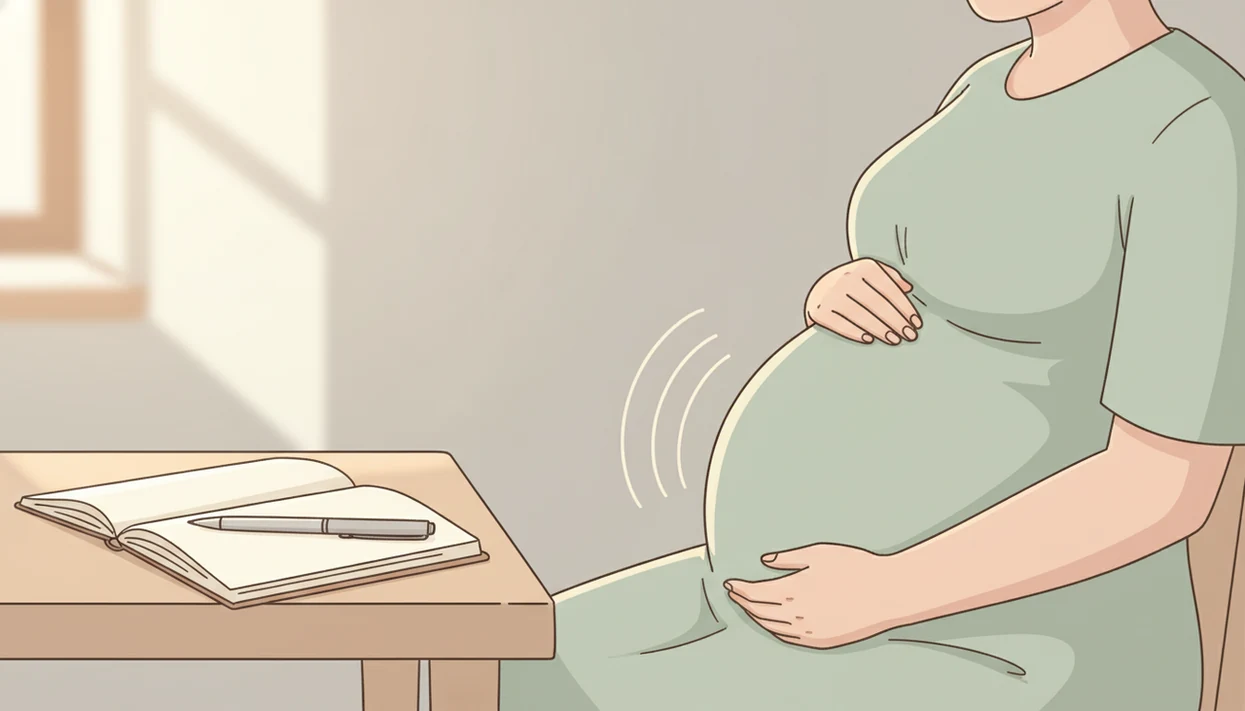
A fetal movement strength scale is a simple way to describe how strong your baby’s movements feel during a kick count, such as fluttery, moderate, strong, or fierce. It does not diagnose health; it helps you record consistent notes so you can notice changes from your baby’s usual third-trimester pattern.
> Definition: A fetal movement strength scale is a subjective 1–5 or word-based note system for recording perceived kick, roll, jab, and flutter strength during fetal movement tracking.
TL;DR
- Use strength notes as descriptions, not medical scores.
- Track what is normal for your baby, because there is no universal normal kick strength.
- Call your provider or go in for care if movements feel fewer, weaker, or clearly different from usual.
Fetal Movement Strength Scale Meaning for Kick Count Notes
A fetal movement strength scale is a descriptive note system, not a clinical test. You can use numbers, such as 1–5, or words like fluttery, moderate, strong, and fierce.
The scale works best when it sits beside a normal kick count. Count the movements first, then add how the whole movement session felt. A sharp heel jab near the waistband may feel like a 4 or 5. A quiet series of swishes may feel like a 2.
Perceived strength is subjective. Your body position, placenta location, gestational age, and attention level can all change what you feel. The most useful comparison is not another pregnancy. It is your baby’s usual movement pattern in the third trimester, especially if you are trying to find baby's normal movement pattern.
At-a-Glance Kick Strength Scale for Daily Movement Tracking
A kick strength scale should be simple enough to use after every session. Most people do better rating the overall session strength instead of scoring every single roll, jab, or flutter.
| Rating | Label | What it may feel like |
|---|---|---|
| 1 | Flutter | Tiny flutters, swishes, or barely-there movement |
| 2 | Light tap | Gentle taps or soft rolls you notice when still |
| 3 | Clear kick or roll | Definite movement you can identify without guessing |
| 4 | Strong jab or stretch | Firm jab, stretch, or roll that gets your attention |
| 5 | Fierce or unusually forceful | Very forceful movement, or stronger than your baby’s usual pattern |
Words are fine. Numbers are optional.
If “moderate” and “strong” feel more natural than 3 and 4, use words. A clean log matters more than a fancy scale. The goal is consistent movement strength tracking across days, not perfect labels during a busy evening.
How Fetal Movement Strength Tracking Works
Fetal movement strength tracking works by turning what you feel into repeatable pattern notes. The score is subjective, meaning it reflects your perception, not a clinical measurement of force.
The method is useful because it reduces noise. If you count at roughly the same time, in a similar position, with the same labels, fewer things are changing at once. That makes it easier to separate a normal quiet spell from a real shift in baseline, which means your baby’s usual pattern. Counts, timing, strength, and context work together: how many movements you felt, how long they took, how strong the session seemed, and what was happening around it. One lighter session may be hard to interpret, but several sessions showing slower, weaker, or different movement are clearer than memory alone. Still, the log does not get the final vote. If movements are fewer, weaker, stopped, or clearly different from usual, treat that concern as more important than any score and call your provider or seek care.
Before You Start a Kick Strength Log
Before you start a kick strength log, make sure you know your care team’s instructions and your own plan for recording. The goal is to begin with clear, repeatable habits before a worrying session happens.
- Ask your provider when to begin. Formal kick counting is often discussed in the third trimester, but your timing may be different if you have a specific pregnancy history or care plan.
- Confirm what to count. Ask whether your team wants you to include rolls, stretches, swishes, flutters, and jabs, or only certain movements.
- Choose a daily quiet window. Pick a time your baby is usually active, like after dinner or when you lie down at night, and try to keep that routine steady.
- Pick your labels first. Decide whether you will use 1–5 numbers or plain words such as light, clear, strong, and fierce before you start logging.
- Save the right phone number. Keep your provider, triage, or labor and delivery number easy to find, so you are not searching for it while worried.
Fetal Movement Strength Tracking Workflow for Kick Count Sessions
How fetal movement strength tracking works: you start a timed session, count movements, record the time to your target, then add perceived strength and pattern notes. The useful signal comes from repeated sessions, not one isolated label.
The reason consistency matters is that strength notes are noisy by themselves. Using the same time of day, similar body position, and the same labels makes a 2/5 tonight easier to compare with a 4/5 from your usual evening pattern.
A typical flow looks like this: sit down, start the timer, count kicks, rolls, jabs, stretches, swishes, and flutters, then write the average strength. You might also note “more rolling than jabbing” or “usual response after dinner was slower.” Trends over several days are easier to explain than a memory from last Tuesday.
Tools like Baby Kicks App can help organize this flow as a baby kick counter app that helps pregnant people count kicks, track movement patterns, and know when to call their provider. A good fetal kick counter and pregnancy movement tracking app for third-trimester monitoring gives you organized notes, not a diagnosis.
How to Use a Fetal Movement Strength Scale
The safest way to use a fetal movement strength scale is to pair it with your provider’s kick count instructions. Many kick-count methods use a reassuring target such as 10 movements within up to 2 hours, while some local guidance differs. ACOG describes kick counting as timing how long it takes to feel 10 movements and contacting your clinician if you do not feel 10 movements within 2 hours: source.
- Set a daily counting time. Choose a time your baby is often active, such as the evening couch with feet propped.
- Count movements. Include kicks, rolls, jabs, stretches, swishes, and flutters if your provider says those count.
- Rate average strength. Score the whole session as 1–5, or use words like light, clear, strong, or fierce.
- Add context notes. Write your position, time, recent activity, and anything unusual.
- Review trends. Look for changes over days, not just one odd session.
- Call for concerning changes. Call your care team if movements are fewer, weaker, stopped, or clearly different.
The most common medically supported way to monitor movement at home is daily kick counting combined with prompt care for reduced or unusual movement.
Third-Trimester Kick Strength Patterns That Matter
Third-trimester movement should not be dismissed as “weaker because the baby is bigger.” Research from 2021 found that fetal movements do not normally become weaker at term, and reduced movement is associated with higher risk of adverse outcomes, including stillbirth source.
- Babies do not normally become weaker at the end of pregnancy.
- A sudden drop from strong jabs to faint taps is worth reporting.
- Fewer movements, weaker movements, or a changed rhythm can all matter.
- Some movement is not automatically reassuring if it is clearly different from usual.
- Loss of a usual strong response, such as after a meal or rest period, should be discussed with your care team.
Clinicians typically recommend paying attention to your baby’s usual pattern and seeking care when that pattern changes. For a wider pattern view, keep strength notes beside your fetal movement patterns log.
Kick Strength Scale Notes for Provider Conversations
Kick strength notes make provider conversations more specific. Instead of saying “movement felt off,” you can say, “usual evening kicks are 4/5 but today felt 2/5,” or “more rolling than jabbing today.”
Useful notes include the date, time, your position, time to target, total movements, and average strength. A care plan page with highlighted times is much easier to discuss than a crumpled notebook page at the bottom of a purse. Messy details get lost.
A clear note might read: “March 12, 9:10 p.m., left side, 10 movements in 65 minutes, average 2/5, usually 4/5 at this time.” Notes support communication, but they do not determine whether the baby is well. If your concern is current, call before polishing the log.
Common Movement Strength Tracking Mistakes
The biggest mistake is comparing kick strength with someone else’s baby. One baby may have big rolls. Another may have sharp jabs. Your useful baseline is your own baby’s normal, especially across the same time of day.
Do not assume weaker movement is normal near delivery. That belief can delay care. Also avoid restarting counts again and again when movement feels reduced. If the pattern is concerning, more at-home counting is not the next step. Call your provider or go in.
Home dopplers and heartbeat apps can also create false reassurance. Hearing a heartbeat at home does not prove fetal well-being when movement has changed. The NHS similarly warns not to rely on home dopplers, phone apps, or handheld monitors when fetal movement is reduced: source. If you want to check fetal movement strength, use it as a description tool, not as a reason to wait through a clear change.
Fetal Movement Strength Scale Verification Checklist
A useful fetal movement strength scale is consistent, plain, and easy to review. It should help you explain changes without turning every movement into a test.
- Use the same general time when possible, such as a 9 p.m. phone alert after brushing teeth, when the house is quieter and you can notice small rolls instead of rushing past them.
- Keep the same scale labels, whether you use 1–5 or words.
- Rate the session-level strength, not every single movement.
- Add context notes, including position, time to target, and anything different that day.
- Review trends over several days, especially if you want to see baby movement patterns over time.
Per the CDC, stillbirth affects about 1 in 175 pregnancies in the United States, with about 21,000 stillbirths each year source. Movement awareness matters, but it should not create panic. Urgent changes belong with your provider or hospital, not inside an app alone.
Limitations
A fetal movement strength scale can make notes clearer, but it has real limits. Treat it as a communication aid, not a safety ruling.
- The scale is subjective and not clinically standardized.
- Strong movements do not guarantee that everything is normal.
- Apps cannot diagnose fetal well-being or fetal distress.
- The scale is most useful in the third trimester and should follow provider-specific advice.
- Fewer, weaker, stopped, or very different movements should prompt medical guidance, not more at-home testing.
- A 1–5 score can be affected by position, placenta location, distraction, and how still you are.
- Movement strength tracking should not replace triage, monitoring, ultrasound, or any evaluation your care team recommends.
If you use a Fetal Kick Tracker, bring the log when it helps. If you are worried right now, call first and organize notes later.
FAQ
What is kick strength?
Kick strength is the perceived force of fetal movement, such as a light flutter, clear roll, strong jab, or fierce stretch. It is not a medical measurement.
Is weak fetal movement normal?
Occasional lighter movement can happen. A clear reduction from your baby’s usual strength or pattern should prompt provider guidance.
Do kicks weaken near delivery?
No, fetal movements do not normally become weaker at term. A noticeable weakening near delivery should be discussed with your care team.
What counts as fetal movement?
Kicks, rolls, jabs, stretches, swishes, and flutters may count as fetal movement. Follow your provider’s instructions on what to include.
Should I score every kick?
No, most people should rate the overall session strength. Scoring every movement can make the log harder to use.
When should I call my provider?
Call your provider or seek care for fewer, weaker, stopped, or very different movements. Do not wait for an app or another count to reassure you.
Can strong kicks rule out problems?
Strong kicks can be reassuring only in the context of your baby’s usual pattern. They cannot rule out complications.
Can an app diagnose fetal distress?
No, apps can track notes, timing, and patterns. They cannot diagnose fetal distress or replace medical evaluation.