See Baby Movement Patterns Over Time With Kick Count Charts
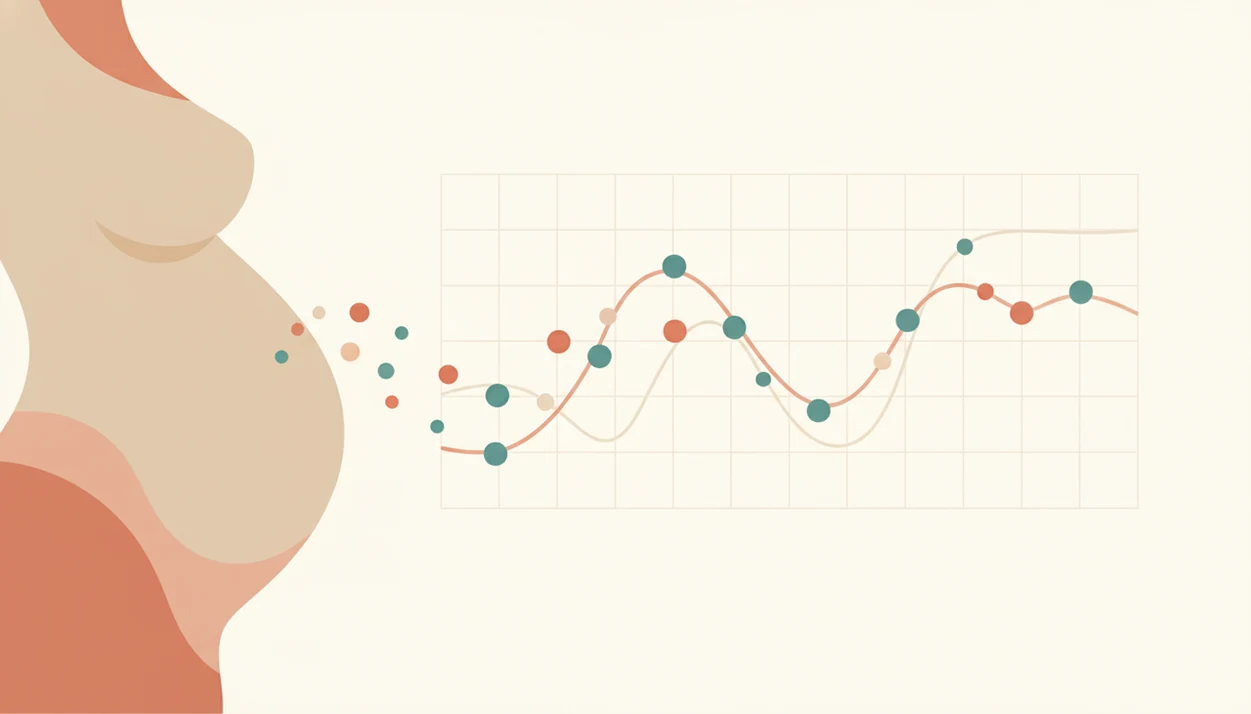
Yes, consistent kick-count sessions can help you see baby movement patterns over time by turning daily movement logs into simple charts across days and weeks. The goal is to recognize your baby’s usual third-trimester pattern and notice meaningful changes sooner.
> A Fetal Kick Tracker is a logging aid for counting movements and organizing trend history; it is not a diagnostic device or a substitute for medical care.
- Track sessions at about the same time each day so your charts compare similar windows.
- Most kick-count routines focus on how long it takes to feel 10 movements in the third trimester.
- Call your provider promptly for a sudden decrease, drastic change, or any movement pattern that worries you.
At-a-glance baby movement trend app results
A baby movement trend app logs kick-count sessions and displays movement trends across time, so you can compare today’s session with earlier days or weeks. The charts are for pattern awareness, not diagnosis.
Most people use this kind of baby movement trend app in the third trimester, often around the same daily time. A 9 p.m. phone alert after brushing teeth is more useful than random counting at noon one day and midnight the next. Same time, same place, less noise in the chart.
A good fetal kick counter and pregnancy movement tracking app for third-trimester monitoring gives you organized session history, not a medical answer about whether your baby is safe.
Baby movement pattern tracking workflow
How baby movement pattern tracking works: each movement session records time, taps, duration, and history. Repeated sessions create a personal baseline for one baby, not a universal “normal.”
- The app records the session start time, each movement tap, the time to target count, and the saved session history.
- Rolls, jabs, swishes, stretches, and flutters can all count if your provider has told you to count them.
- Repeated daily sessions help show your baby’s usual movement pattern over time.
- Same-time tracking improves comparability because many babies are more active at certain times of day.
- Clinicians typically recommend calling your care team for decreased or unusual movement; ACOG notes that fetal movement counting is one way providers may check fetal well-being, and many routines use 10 movements within 2 hours as a reassuring third-trimester benchmark source.
For a broader plain-language explanation, our guide to fetal movement patterns covers what can vary by baby and time of day. The folded handout in a hospital bag is helpful, but a clean digital log is easier to bring up during a visit.
How to use kick count charts over time
The most common medically supported way to use kick count charts over time is to repeat a simple timed session and compare it with your own past sessions. Charts support awareness, but they cannot determine fetal health.
- Set a daily time when your baby is usually active, such as after dinner or before bed.
- Start a session when you are settled, with the phone timer open and distractions reduced.
- Tap each movement your provider says should count, including kicks, rolls, jabs, or stretches.
- Stop at 10 movements or at the provider-defined target if your care team gave different instructions.
- Review the chart for session length, missed days, and changes across the week.
- Call for concerning changes such as a sudden decrease, drastic shift, or movement that worries you.
A simple log, same time, same place, usually beats a scattered set of notes. If paper keeps ending up as a crumpled notebook page at the bottom of a purse, a chart can make the history easier to share.
Method for seeing baby movement patterns over days and weeks
The method for seeing baby movement patterns over days and weeks is repeated kick-count sessions logged under similar conditions. The chart becomes useful only when the data is consistent enough to compare.
- Repeated sessions show how long it takes to reach the target count on different days.
- Charts can compare session duration, completion time, and daily consistency.
- Missed sessions can create gaps that look more meaningful than they are.
- Distractions, naps, errands, or changing the time of day can distort the trend.
- Cleveland Clinic guidance says 10 movements in about 1 hour is common, and timing how long it takes to reach 10 kicks is a standard counting method source.
For many pregnant people, evening tracking works because the day has slowed down. A pillow wedged under one hip, phone nearby, and the same routine each night can produce cleaner chart data than counting whenever you remember. If you are still trying to find baby's normal movement pattern, consistency matters more than a perfect-looking graph.
Three baby movement trend app stories
These three examples show how trend charts can support decisions without replacing provider guidance. In every story, the chart is a conversation aid, not an interpretation of fetal health.
Maya’s stable evening chart
Maya counts during the living room news after dinner. Her chart shows most sessions reaching 10 movements in a similar window, so she brings that stable history to her appointment and asks whether to keep the same routine.
Jordan’s slower kick-count sessions
Jordan notices three sessions taking longer than usual. Nothing dramatic, but the pattern is different enough that they call the provider and write down what changed before the nurse calls back.
Sam’s support-partner tracking routine
Sam’s partner charges the phone overnight and reminds Sam to start the session at the usual time. At the next visit, they open the saved chart instead of digging through memory. Tools like Baby Kicks App can help organize that history, but the provider’s instructions should override any app default.
Common kick count charts over time patterns
Kick count charts over time usually matter because they show change from your baby’s usual pattern. One isolated session may be less useful than several comparable sessions in a row.
- Stable daily session durations can be a reassuring personal pattern when they match what your care team expects.
- Gradual changes should be discussed with a provider, especially when they persist over several days.
- Sudden decreases or drastic pattern changes are reasons to call promptly, even if yesterday’s chart looked normal.
- It is a misconception that babies normally move less right before labor; movement should generally remain familiar up to birth.
- In a prospective study of 3,014 pregnancies, reduced fetal movements were associated with 4.51-fold increased odds of stillbirth compared with normal movements source.
A slower chart does not prove danger. Still, it is exactly the kind of change worth reporting. If strength feels different too, it may help to separately check fetal movement strength without overreading every single tap.
What baby movement trend charts do not show
Baby movement trend charts show recorded behavior, not a fetal diagnosis. A normal-looking chart should never override gut concern, bleeding, pain, fluid leakage, or provider instructions.
- Charts cannot confirm that a baby is well.
- Charts cannot rule out fetal distress.
- Charts cannot explain why movement changed.
- Charts cannot replace urgent evaluation when symptoms are present.
- Charts cannot prove that a consumer app improves birth outcomes.
Research supports fetal movement awareness more clearly than it supports any specific consumer app. A randomized trial in 1,076 high-risk pregnancies found that a structured fetal movement awareness and counting program reduced stillbirth rates from 7.0 per 1,000 to 2.3 per 1,000 births. That was a structured program, not proof that every app produces the same result source.
So use the chart as a record. Not a verdict. For more detail on app boundaries, read what app identifies fetal movement changes.
When to Call Your Provider About Baby Movement
Call your provider promptly if your baby’s movement suddenly decreases, changes drastically, or simply feels wrong to you. Do not wait for a chart to “prove” the concern, especially if you also have bleeding, pain, or fluid leakage.
When you are unsure, use the emergency or after-hours plan your prenatal care team gave you. The saved sessions can help explain what you noticed, but they are context for a clinician, not a diagnosis.
- Call your provider, labor and delivery unit, or after-hours number for a sudden drop, major change, or movement pattern that worries you.
- Go by your care team’s urgent instructions right away if there is bleeding, pain, fluid leakage, or another symptom they told you to treat as urgent.
- Follow your provider’s kick-count target if it differs from the app’s default number, timing, or reminder.
- Bring saved sessions to visits so your provider can see the pattern you recorded.
- Ask at your next appointment which number to call at night, on weekends, or when you are traveling.
Limitations
Kick-count trend tools are useful only inside clear safety boundaries. The app can organize what you record, but your care team decides what the information means.
- Apps rely on user timing and attention, so inconsistent logging can make charts misleading.
- Not every decrease means something serious, so tracking may increase anxiety or lead to unnecessary visits.
- Normal-looking charts can create false reassurance if a parent ignores bleeding, pain, fluid leakage, or a strong concern.
- These tools are mainly useful in the third trimester; earlier movement is often more irregular.
- Apps do not replace prenatal care, medical judgment, monitoring, or urgent evaluation.
- Provider instructions should override the app’s default target, timing, or routine.
- Missed reminders happen, especially after appointments, travel, or a long workday.
Baby Kicks App can help keep a daily kick count routine organized, including saved sessions and charts. It should still be used as a log for conversations with your provider, not as permission to wait when movement feels wrong.
FAQ
Can kick-count charts show trends over time?
Yes. Kick-count charts can log sessions and show patterns across days or weeks, but they cannot diagnose fetal health or tell you whether it is safe to wait.
When should I start kick counting?
Many people start around 28 weeks, or earlier or later if their provider recommends it. Follow your provider’s instructions for your pregnancy.
How many kicks are normal?
Many routines use 10 movements as a target. Your baby’s usual movement pattern over time matters more than comparing with someone else’s baby.
How long should 10 kicks take?
Ten movements in about 1 hour is common for many babies. Many providers also use 10 movements within 2 hours as a reassuring benchmark.
Do babies move less before labor?
No, babies should not be assumed to move less right before birth. Call your provider if movement decreases or changes drastically.
When should I call my provider about baby movement?
Call promptly for a sudden decrease, drastic change, or any movement pattern that worries you. Do not wait for an app chart to confirm the concern.
Can charts predict fetal distress?
No. Kick count charts support awareness, but they cannot diagnose fetal distress or predict outcomes.
Can partners track baby kicks?
Yes. A support partner can help with reminders, logging, charging the phone, and bringing trends to appointments.